Author: Bitterroot Retreat And Adventures

  • Western Montana Fly Fishing Report – Week of April 27, 2026 | Lightweight Fly Shop

    Western Montana Fly Fishing Report – Week of April 27, 2026 | Lightweight Fly Shop

    Western Montana Fly Fishing Report

    Week of April 27–May 3, 2026
    Lightweight Fly Shop – Stevensville, Montana
    Updated: April 28, 2026  |  Best Fishing Window: 12:00 p.m. – 4:00 p.m.
    The Bitterroot is still the best all-around option this week, but this is not a low-water spring picnic. Flows remain elevated across Western Montana, mornings are cold, and the most productive fishing is coming from softer edge structure, side channels, slower seams, and protected tailouts. The West Fork is still the cleanest smaller-water option, while the Blackfoot, Clark Fork, and Rock Creek all require careful water selection.

    Regional River Conditions Overview

    Western Montana is in a late-April spring transition. The rivers are not fully blown out, but they are high enough that careless water selection will punish you. Cold mornings and periodic showers are keeping the early window slow, while warmer midday and afternoon periods are giving anglers the best shot at active fish and visible bugs.

    The Bitterroot offers the best mix of fishable structure, access, and hatch potential this week. The West Fork remains the cleanest and most manageable smaller-water option. Rock Creek is elevated but improving, the Blackfoot remains difficult and mostly subsurface, and the Clark Fork is still a big-water game where edge habitat matters more than optimism.


    Bitterroot River

    Conditions

    Water temp: 46–52°F. The Bitterroot remains the best overall bet this week. Flows are still elevated, but the river is fishing better than the bigger, heavier systems around Missoula. Skwalas are tapering, while BWOs, March Browns, and early caddis are becoming the main afternoon story.

    Where to Fish

    • Middle river from Darby through Victor
    • Inside bends, soft shelves, and side channels near Florence
    • Lower-river bank seams and protected tailouts near Missoula
    • Walking-speed current with depth and cushion

    How to Fish It

    • Nymph through the late morning before switching to dries
    • Use dry-dropper rigs when bugs start showing but fish are not fully committed
    • Focus on soft water instead of broad, pushy center-river current
    • Keep your rig near the bottom until the hatch earns your dry fly

    Top Patterns

    • BWO dun or emerger, size 16–18
    • March Brown adult, size 12–14
    • Elk hair caddis or X-Caddis, size 14–16
    • Dark mayfly nymph, size 14–18
    • Stonefly nymph, size 8–12
    • Worm pattern in stained edge water
    Best For This Week: Anglers looking for the best mix of access, hatch opportunity, and fishable water.

    Blackfoot River

    Conditions

    Water temp: 44–49°F. The Blackfoot is still big, cold, and difficult. Recent local reports continue to call the river off-color and tough after bumps in flow. This is mostly a subsurface game, and dry-fly expectations should stay locked in the truck where they belong.

    Where to Fish

    • Soft lower-river shelves and inside corners
    • Back-eddies with depth and slower current
    • Protected banks below major current breaks
    • Short, high-percentage holding water only

    How to Fish It

    • Fish heavy nymph rigs
    • Work close to the bank and stay out of the heavy push
    • Use short, controlled drifts instead of long lazy indicator swings
    • Carry streamers, but do not expect easy numbers

    Top Patterns

    • Stonefly nymph, size 8–10
    • Dark mayfly nymph, size 14–16
    • Worm pattern, red or wine
    • Heavy attractor nymph
    • Small olive or black streamer, size 4–6
    Best For This Week: Experienced anglers willing to grind through heavy water for fewer chances.

    Clark Fork River

    Conditions

    Water temp: 47–52°F. The Clark Fork remains big and section-dependent. Upper sections and protected edge water are more realistic than the lower river, but this is still not a casual wade-fishing week. The main current is too heavy in many places, so fish the margins or donate your afternoon to bad decisions.

    Where to Fish

    • Protected seams above Missoula
    • Slower shelves and tailouts with shape and depth
    • Off-channel sloughs and edge water
    • Avoid broad lower-river main-current pushes

    How to Fish It

    • Nymph deep and keep contact short and controlled
    • Streamer fishing is worthwhile in bigger edge water
    • Use dry-dropper only if bugs and rising fish justify it
    • Fish less water and fish it better

    Top Patterns

    • BWO dun, size 16–18
    • March Brown adult, size 12–14
    • Stonefly nymph
    • Dark mayfly nymph
    • Sowbug-style pattern
    • Olive or black streamer, size 4–6
    Best For This Week: Anglers who know how to find soft edge water and avoid wasting time in the main push.

    Rock Creek

    Conditions

    Water temp: 44–49°F. Rock Creek is elevated but improving. Recent cold weather has helped the creek drop and clear, though flows near Clinton remain around the high-water mark for comfortable wading. This is still technical edge-water fishing first, dry-fly romance second.

    Where to Fish

    • Soft edges with depth in the lower canyon
    • Inside turns with slower current
    • Pocket water with real refuge speed
    • Margins near wood, boulders, and deeper troughs

    How to Fish It

    • Start with nymphs and let the hatch earn your dry fly
    • Wade carefully and fish short, high-percentage lanes
    • Prioritize depth over fly variety
    • Carry a streamer for lower, softer canyon water

    Top Patterns

    • BWO dry, size 16–18
    • March Brown dry, size 12–14
    • Stonefly nymph
    • Pheasant-tail style mayfly nymph
    • Caddis larva, size 14–16
    • Black or olive streamer, size 4–6
    Best For This Week: Technical wade anglers who can fish elevated water safely and ignore the hero lanes.

    West Fork of the Bitterroot

    Conditions

    Water temp: 43–48°F. The West Fork remains the cleanest smaller-water option this week. Dam regulation below Painted Rocks helps keep it more manageable than the freestone rivers, but flows are still up enough that anglers need to fish softer structure and avoid treating it like summer water.

    Where to Fish

    • Regulated stretches below Painted Rocks through Conner
    • Clear riffles, soft seams, and tailouts with moderate current
    • Bank water from late morning through mid-afternoon
    • Tailout edges where fish can slide up during hatch windows

    How to Fish It

    • Nymph the morning, then switch once fish start looking up
    • Use 5X as standard and 6X when fish get selective
    • Approach from downstream and keep your first cast clean
    • Fish the slowest useful water when flows feel pushy

    Top Patterns

    • Parachute BWO or CDC emerger, size 16–18
    • Elk hair caddis or X-Caddis, size 14–16
    • Hare’s ear nymph, size 14–16
    • Soft hackle, size 14–16
    • Caddis larva, size 14–16
    • Jig-style mayfly nymph, size 14–16
    Best For This Week: Anglers looking for cleaner smaller water and a legitimate afternoon hatch window.

    Planning Note

    Cold mornings are still slowing the early bite, so do not be in a rush to start at daylight. Noon to 4 p.m. is the best window this week, especially on the Bitterroot and West Fork. Start with nymphs, watch for BWOs, March Browns, and early caddis, then switch when the river gives you a reason.

    If you want the safest play, fish the Bitterroot or West Fork. If you want to fish the Blackfoot, Clark Fork, or Rock Creek, bring better judgment, more weight, and fewer fantasies.


    River Flow Snapshot – April 28, 2026

    Current gauge values are based on the latest available USGS readings reviewed for this weekly report.

    River Section Gauge Flow (CFS) Trend
    Bitterroot Upper Near Darby (12344000) 1,870 Dropping / Elevated
    Bitterroot Middle Bell Crossing nr Victor (12350250) 3,000 Dropping / Elevated
    Bitterroot Lower Near Missoula (12352500) 4,390 Dropping / Elevated
    Blackfoot Lower Near Bonner (12340000) 4,610 Latest posted value
    Clark Fork Upper Above Missoula (12340500) 6,270 Dropping / High
    Clark Fork Lower Below Missoula (12353000) 10,300 Dropping / High
    Rock Creek Lower Near Clinton (12334510) 1,190 Dropping / Elevated
    West Fork Bitterroot Lower Near Conner (12342500) 733 Up / Manageable

    The Bitterroot remains the best all-around balance of opportunity and fishable water. The West Fork is the cleanest smaller-water option. The Blackfoot, Clark Fork, and Rock Creek still require careful water selection and conservative wading.


    Fly Box of the Week

    Dry Flies

    • BWO dun, size 16–18
    • CDC BWO emerger, size 16–18
    • March Brown adult, size 12–14
    • Elk hair caddis or X-Caddis, size 14–16
    • Tan chubby or leftover Skwala dry, size 8–12

    Nymphs

    • Stonefly nymph, size 8–12
    • Dark mayfly nymph, size 14–18
    • Jig-style PT nymph, size 14–16
    • Caddis larva, size 14–16
    • Hare’s ear nymph, size 14–16
    • Worm pattern, red or wine

    Streamers

    • Conehead sculpin, olive or brown, size 4–6
    • Articulated streamer, black or olive, size 4–6

    Hatch and Fly Chart – Late April 2026

    Hatch / Insect Activity Best Time Recommended Fly Size
    Blue-Winged Olive Active and important 12 p.m. – 4 p.m. Parachute or CDC emerger 16–18
    Early Caddis Building on warmer afternoons 1 p.m. – 4 p.m. Elk hair caddis or X-Caddis 14–16
    March Brown Still in the mix Noon – 3 p.m. Adult or soft hackle 12–14
    Skwala Stonefly Lingering but tapering hard Late morning to early afternoon Adult or nymph 8–12
    Midges Still relevant in mornings and slow water Morning Larva or pupa 18–22

    The hatch calendar is moving away from Skwala tunnel vision and into a more balanced spring mix. BWOs, March Browns, and early caddis are the bugs to pay attention to this week.


    Gear Picks of the Week

    5-Weight Rod

    A 9-foot 5-weight is the right tool for Bitterroot and West Fork work when you need to switch between nymphs, dry-dropper rigs, and dry flies.

    6-Weight Rod

    Bigger water and heavier subsurface rigs on the Blackfoot and Clark Fork need more rod than most anglers want to admit.

    Studded Boots + Split Shot

    Spring cobble is slick, and depth still matters more than elegance on most of these rivers.


    Strategy and Expectations This Week

    Start with nymphs, fish soft structure, and let the hatch tell you when to change. Bitterroot first, West Fork if you want cleaner smaller water, Rock Creek only if you can wade elevated water safely, and Blackfoot or Clark Fork only if you know exactly why you are there.

    Success this week looks like a handful of well-earned fish from selected water, not all-day heroics. If you try to make every river fish the same way, the river will correct you.


    FAQ

    What is the best river to fish this week in Western Montana? The Bitterroot is the best overall option this week.
    What is the cleanest smaller-water option right now? The West Fork of the Bitterroot.
    Are Skwalas still happening? A little, but they are tapering and are no longer the main thing to build your whole day around.
    Should I nymph or fish dries this week? Nymph first. Switch to dries when BWOs, March Browns, or caddis actually show.
    What time of day is best? Midday through mid-afternoon, especially while mornings stay cold.
    What is the biggest mistake this week? Fishing fast current just because it looks good from the bank.

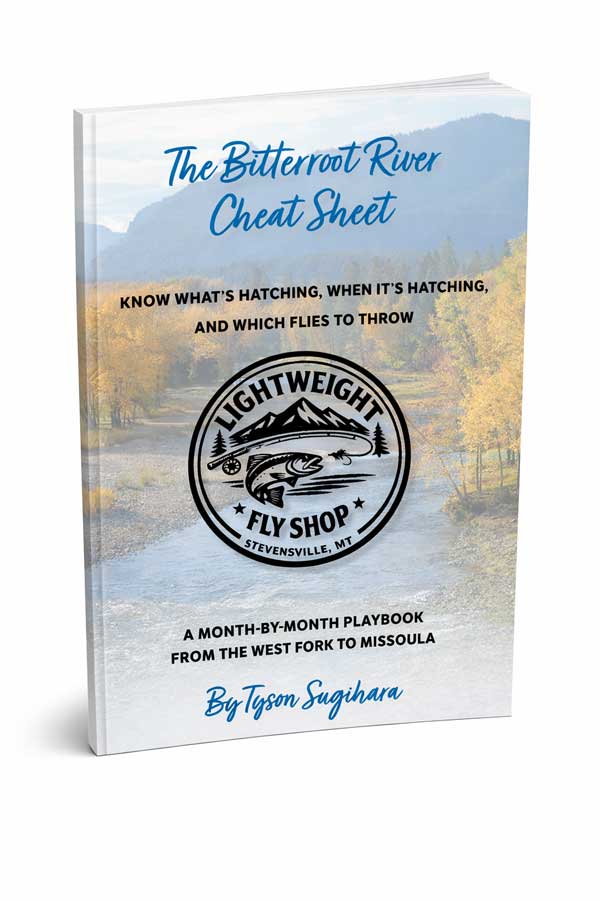
  • The Bitterroot River Fly Fishing Guide Every Angler Should Have

    The Bitterroot River Fly Fishing Guide Every Angler Should Have

    he Bitterroot River is one of the most productive and diverse trout fisheries in Montana. From the freestone pocket water of the upper river to the wide riffles and runs downstream toward Missoula, the Bitterroot offers incredible fishing nearly year-round.

    But if you’ve spent any time here, you know one thing quickly becomes obvious.

    The Bitterroot rewards anglers who understand it.

    Knowing where to fish, when to fish, and what flies to use makes the difference between a slow day and one you’ll talk about for years.

    That’s exactly why we created the Bitterroot River Fly Fishing Guide.

    It’s a practical, locally built guide designed to help anglers fish the Bitterroot with confidence.

    GET YOUR FREE GUIDE HERE!

    Why the Bitterroot River Can Be Tricky

    The Bitterroot looks simple on the surface. It’s a classic Montana freestone river with riffles, runs, pocket water, and long gravel bars.

    But under that surface are constantly changing conditions:

    • Seasonal hatches that shift quickly
    • Water levels that change dramatically through the year
    • Sections of river that fish very differently
    • Access points many anglers overlook

    Local knowledge matters here.

    After years of guiding, fishing, and helping anglers in the shop at Lightweight Fly Shop, we kept seeing the same questions:

    • What flies should I carry for the Bitterroot?
    • Where should I start floating?
    • What hatches should I expect this time of year?
    • What sections fish best?

    So we decided to put everything into one guide.

    What’s Inside the Bitterroot River Fly Fishing Guide

    The Bitterroot River Fly Fishing Guide is designed to be simple, useful, and easy to reference whether you’re planning a trip or standing knee-deep in the river.

    Inside you’ll find:

    Bitterroot River Hatch Overview
    A breakdown of the most important hatches throughout the season, including Skwalas, mayflies, caddis, and terrestrials.

    Fly Selection That Actually Works Here
    Proven flies that consistently produce on the Bitterroot.

    River Sections and Access Points
    Key areas of the river and how they fish throughout the year.

    Seasonal Fishing Strategies
    How to approach the Bitterroot in spring, summer, and fall.

    Local Insights from Years of Guiding
    The kind of information you only learn after spending a lot of time on the river.

    This guide is built for both visiting anglers and locals who want to fish the Bitterroot more effectively.

    Perfect for Planning Your Next Bitterroot Trip

    Whether you’re coming to the Bitterroot Valley for the first time or you fish here regularly, having the right information makes a huge difference.

    This guide will help you:

    • Choose the right flies before you hit the river
    • Understand the major seasonal hatches
    • Identify productive water types
    • Plan better fishing days

    It’s the kind of quick reference anglers wish they had sooner.

    Download the Bitterroot River Fly Fishing Guide

    If you want to fish the Bitterroot with more confidence this season, grab a copy of the guide.

    Enter your email below and we’ll send the Bitterroot River Fly Fishing Guide straight to your inbox.

    You’ll also receive our weekly fishing reports and local river updates from Lightweight Fly Shop so you always know what’s happening on the water.

    Download the Bitterroot River Fly Fishing Guide below.


    Fish the Bitterroot with Us

    If you’re planning a trip to the Bitterroot Valley, we’d love to help you make the most of it.

    At Lightweight Fly Shop, we offer:

    • Guided Bitterroot River fly fishing trips
    • Local fly selections that match current hatches
    • River advice from guides who fish here every day

    You can also stay in one of our comfortable Bitterroot Valley cabins and turn your fishing trip into a full Montana getaway.

    Stop by the shop in Stevensville or reach out to book a trip.

    Tyson Sugihara
    Lightweight Fly Shop
    (406) 499-7729


  • Western Montana Fishing Report – Week of August 25th

    Weather for Stevensville, MT:

    Current Conditions: Sunny, 57°F (14°C)

    Daily Forecast:

    • Monday, August 25: Low: 55°F (13°C), High: 90°F (32°C), Description: Sun through high clouds
    • Tuesday, August 26: Low: 54°F (12°C), High: 88°F (31°C), Description: Increasing cloudiness
    • Wednesday, August 27: Low: 59°F (15°C), High: 79°F (26°C), Description: Mostly cloudy
    • Thursday, August 28: Low: 55°F (13°C), High: 77°F (25°C), Description: Cloudy with a thunderstorm in parts of the area in the afternoon
    • Friday, August 29: Low: 48°F (9°C), High: 82°F (28°C), Description: Partly sunny with a thundershower in spots in the afternoon
    • Saturday, August 30: Low: 49°F (9°C), High: 84°F (29°C), Description: Mostly sunny
    • Sunday, August 31: Low: 47°F (8°C), High: 85°F (29°C), Description: Mostly sunny”

    Western Montana Fishing Report – Week of August 25, 2025

    Rivers Covered: Bitterroot • Blackfoot • Clark Fork • Rock Creek
    Brought to you by Lightweight Fly Shop – Stevensville, MT


    Weather Outlook & Best Fishing Window

    The week brings hot summer weather, with highs climbing to the low 90s°F and cooling off into the mid-50s°F through the night—ideal for early fly time. Stick to morning sessions only; hoot-owl restrictions are active in many sections from 2 p.m. until midnight, so plan your day accordingly.


    River-by-River Detailed Report

    Bitterroot River

    • Current Conditions: Flow remains low (~440 cfs at Darby), and midday water temperatures are climbing—hot enough to stress trout.
      (turn0search0)
    • Fishing Trends: Dry-dropper setups remain very productive, with Chubby Chernobyls, Water Walkers, Henneberry Hoppers, and low-profile attractors like Plan B, Hop-Drop-And-Roll, and various foam ants proving effective. Early-season Trico spinners are showing sporadic activity—Twiggy and Sparkle Flag patterns are prime for picky risers. Streamer tactics (Sparkle Minnows, Kreelex, Overcoats) continue to score between hatches.
      Hoppers and stoneflies also remain top choices, especially early.
    • Hoot-Owl Alert: Restrictions active on the entire river—fish only before 2 p.m.
      (turn0search0)

    Blackfoot River

    • Current Conditions: Flows are low (~330 cfs near Bonner) with water in the mid-to-upper 60s°F.
      (turn0search3)
    • Fishing Trends: Terrestrials dominate—from Water Walkers and Chubby Chernobyls to Hoppers. Underneath, try Pat’s Rubberlegs, TJ Hookers, Prince Nymphs, or Perdigons. Streamer action remains reliable, especially early or under cloud cover—Sparkle Minnows, Kreelex, and Lil Kim still triggering strikes.
    • Hoot-Owl Alert: The entire mainstem is closed from 2 p.m.–midnight. Early start is essential.
      (turn0search1)

    Clark Fork River

    • Current Conditions: Upstream hoot-owl restrictions are in place; midday temps remain elevated, with morning conditions best for bites.
      (turn0search2)
    • Fishing Trends: Anglers report success with hopper-dropper systems, plus nocturnal stonefly imitations and flashy streamers in shaded, deeper runs.
    • Hoot-Owl Alert: Upper sections are under 2 p.m.–midnight closure.

    Rock Creek

    • Current Conditions: Upper sections are under hoot-owl restrictions due to heat and low flow.
      (turn0search2)
    • Fishing Trends: Traditional dry-dropper tactics still deliver—Micro Chubbies, Hippie Stompers, PMD Sparkle Duns, with Prince or tungsten jig nymphs beneath. Approach quietly; fish are chain-deep in fast, oxygenated pockets.

    Hoot-Owl Restrictions Summary

    RiverSection AffectedClosure Hours
    BitterrootEntire River2 p.m. – Midnight
    BlackfootEntire Mainstem2 p.m. – Midnight
    Clark ForkUpper Section2 p.m. – Midnight
    Rock CreekUpper Section2 p.m. – Midnight

    Fly Box for the Week

    Bitterroot:

    • Chubby Chernobyl, Water Walker, Henneberry Hopper, Plan B, Foam Ant, Twiggy or Sparkle Flag (Trico)

    Blackfoot:

    • Water Walker, Chubby Chernobyl, Pat’s Rubberlegs, TJ Hooker, Sparkle Minnow

    Clark Fork:

    • Hopper-dropper combinations, nocturnal stonefly, streamers (Sparkle Minnow, Kreelex)

    Rock Creek:

    • Micro Chubby, PMD Sparkle Dun, Tungsten jig nymphs (e.g., Prince)

    Gear Picks from Lightweight Fly Shop

    • Rods: EVOs & Technica—perfect for light, delicate presentations in low water
    • Indicators: Oros Strike Indicators—easy to customize on-the-fly
    • Sunglasses: Bajío polarized—for clarity in bright light
    • Leaders/Tippet: Airflo & Rio—for stealthy presentations in clear, low water

    Plan Your Week

    Make the most of that sweet morning bite with a half or full-day guided trip on the Bitterroot or Blackfoot. Then, retreat to one of our cozy cabins—just minutes from the river—to relax between sessions.
    Reserve today: lightweightflyshop.com


  • Western Montana Fishing Report – Week of August 10, 2025

    Western Montana Fishing Report – Week of August 10, 2025


    🎣 Western Montana Fishing Report – Week of August 10, 2025

    Bitterroot • Blackfoot • Clark Fork • Rock Creek
    Brought to you by Lightweight Fly Shop – Stevensville, MT


    🌤 Weather Outlook (Aug 10–16)

    Hot summer conditions continue with highs in the upper 80s to mid-90s°F. Mornings in the 50s–60s°F will offer the coolest water and most active fish. Best fishing window: first light until 2 p.m. — after that, hoot-owl restrictions are in effect. Mid-week heat may push temps higher, so be sure to carry a thermometer.


    🐟 River Reports

    Bitterroot River

    • Flow & Temps: ~440 cfs at Darby / ~240 cfs at Bell Crossing. Morning temps low 60s°F, approaching 70°F by afternoon.
    • Fishing: Strong morning dry-fly bite with caddis, Tricos, and hoppers. Shade lines, riffle corners, and bankside pockets are producing.
    • Top Flies: Elk Hair Caddis (#14-16), Parachute Trico (#18-20), Tan Hopper (#10-12), Pheasant Tail (#16-18).
    • Tip: Long leaders (12’+) with 5x tippet help in clear water.
    • Hoot-Owl: Entire river from East/West Fork to the Clark Fork — 2 p.m.–midnight closure.

    Blackfoot River

    • Flow & Temps: ~450 cfs at Bonner. Morning temps mid-60s°F, warming quickly.
    • Fishing: Spruce moths are the ticket mid-morning. Dry-dropper rigs with big foam dries and tungsten nymphs are producing in seams and pocket water. Early streamer bite is solid on overcast mornings.
    • Top Flies: Spruce Moth (#12-14), Potter’s Moth (#12-14), Chubby Chernobyl (#10-12), Frenchie Jig (#14-16), Sparkle Minnow (Olive).
    • Tip: A 6wt rod handles big foam and small streamers well.
    • Hoot-Owl: Entire mainstem — 2 p.m.–midnight closure.

    Clark Fork River

    • Flow & Temps: Moderate summer flows; temps low 60s°F early, high 60s°F by afternoon.
    • Fishing: Best early with hopper-dropper setups. Foam stones or hoppers above smaller tungsten nymphs are finding fish. Shady banks and deeper pools holding trout.
    • Top Flies: Henneberry Hopper (#8-10), Chubby Chernobyl (#8-10), Spanish Bullet Jig (#14-16), Pat’s Rubberlegs (#8-10), Mini Dungeon (Black).
    • Tip: Cover water quickly — fish are podded up in the best oxygenated zones.
    • Hoot-Owl: Upper section from Warm Springs to Blackfoot confluence — 2 p.m.–midnight closure.

    Rock Creek

    • Flow & Temps: ~250 cfs at the mouth. Clear, low, and cool early.
    • Fishing: Smaller terrestrials and attractor dries over tungsten jig nymphs are producing. Target faster runs and deep pockets for the most consistent action.
    • Top Flies: Micro Chubby (#14-16), Hippie Stomper (#14-16), PMD Sparkle Dun (#16-18), Jig Duracell (#14-16), Prince Nymph (#14-16).
    • Tip: Stealth counts — approach from downstream and use shorter, accurate casts.
    • Hoot-Owl: Upper section from West/Middle Fork to Stoney Creek — 2 p.m.–midnight closure.

    🦉 Hoot-Owl Restrictions Summary

    RiverStatusHours Closed
    BitterrootEntire river2 p.m.–Midnight
    BlackfootEntire mainstem2 p.m.–Midnight
    Clark ForkUpper section2 p.m.–Midnight
    Rock CreekUpper section2 p.m.–Midnight

    🎒 Gear Picks from Lightweight Fly Shop

    • Rods: EVOs & Technica — perfect for delicate presentations in low water.
    • Indicators: Oros Strike Indicators — simple, effective, and adjustable.
    • Sunglasses: Bajío polarized — cut glare, spot fish in bright summer sun.
    • Leaders/Tippet: Airflo & Rio — stealth rigs for picky trout.
    • Local Art: Original oil paintings by Jodi Monahan — Montana beauty for your home.

    📅 Book Your Adventure

    Beat the heat with full- or half-day guided trips on the Bitterroot & Blackfoot Rivers. After fishing, relax in our cozy cabin rentals just minutes from the river.
    📍 Reserve now: lightweightflyshop.com

  • Tornado Anchors at Lightweight Fly Shop: Stop Where It Counts, Fish Where You Want

    Tornado Anchors at Lightweight Fly Shop: Stop Where It Counts, Fish Where You Want

    What Is the Tornado Anchor?

    The 30lb Tornado Anchor isn’t just heavy—it’s smart. Designed with a unique rotating plate system, this anchor doesn’t just drop and hope—it grabs, twists, and digs into riverbeds with serious force.

    Here’s what makes it stand out:

    • Patented rotating fins that create torque and increased grip
    • Streamlined shape for faster, cleaner drops
    • All-steel construction—durable, rust-resistant, and battle-tested
    • Built in the USA and designed by river anglers who get it

    Whether you’re anchoring in fast water, uneven bottom, or wind, this anchor holds firm without skidding or hopping around.

    🛒 Check it out here


    Why Lightweight Fly Shop Carries Tornado Anchors

    Anchoring shouldn’t be a gamble. That’s why we only stock gear we trust on our own boats. The Tornado Anchor earned its spot on our shelf for a few key reasons:

    • It works better than traditional pyramid anchors, especially in moving water
    • It reduces drag and bounce when lifted—less wear on your rope, pulley, and back
    • It’s a one-and-done solution—drop it once, and you’re set
    • The quality and finish are top-tier—built to last seasons, not trips

    If you’re guiding, floating solo, or taking out friends who love to cast and chill, this anchor turns your boat into a stable platform, not a runaway barge.


    Ideal for:

    • Drift Boats
    • Rafts
    • Skiffs
    • Fishing in heavy current, deep runs, tailouts, and windy conditions
    • Anyone tired of babysitting their anchor line

    Key Specs of the 30lb Tornado Anchor:

    • Weight: 30 lbs
    • Material: Powder-coated steel
    • Design: Rotating fin system for increased grip and resistance
    • Made In: USA
    • Dimensions: Compact footprint fits standard anchor mounts

    This isn’t just a hunk of metal—it’s engineered anchoring.


    FAQs About Tornado Anchors

    Q: Is 30 lbs too heavy for my boat?
    Not at all. 30 lbs is the sweet spot for most drift boats, rafts, and skiffs—especially if you fish in faster water. The design makes it feel lighter when retrieving, too.

    Q: Will it fit my existing anchor mount?
    Yes! The Tornado Anchor has a standard eyelet that works with most anchor systems. Just drop it in and go.

    Q: Is this just for rivers, or will it work on lakes too?
    It works great on lakes, especially if you’re fishing in wind or want a faster drop. But it really shines in current where traditional anchors slide.

    Q: Does it damage the river bottom?
    It grabs, but doesn’t gouge like some anchors. It’s designed to create rotational grip, not drag and dig. Easier on the ecosystem and easier to retrieve.


    Final Thoughts: Drop, Lock, Cast

    If you float often—and especially if you fish fast-moving water—you already know the importance of a dependable anchor. The Tornado Anchor doesn’t just sit on the bottom. It grabs on and stays put, giving you the confidence to fish harder, focus better, and hit every spot with precision.

    We’re stoked to carry this kind of innovation in the shop because it solves a real problem—and does it beautifully.

    🎣 Come by Lightweight Fly Shop to see the Tornado Anchor in person or order it online here. Your back will thank you. So will your fishing buddies.

  • From Student to Guide: My Experience at Fly-Fishing Guide School in the Bitterroot Valley

    From Student to Guide: My Experience at Fly-Fishing Guide School in the Bitterroot Valley

    This past March, I had the opportunity to attend fly-fishing guide school with Jim Mitchell of Montana Hunting Fishing Adventures and Bitterroot Fly Company—and to say it was transformative would be an understatement.

    I started the program on March 10th with one simple goal: to become a better, more knowledgeable river guide in my own backyard. While I’ve spent plenty of time on the water, I was still fairly new to guiding on the local rivers—the Bitterroot, East Fork, West Fork, and Blackfoot in particular. These waters are diverse, dynamic, and at times downright tricky. I knew I needed more than just a guide license—I needed real, on-the-water experience with someone who understood the rivers like the back of their hand.

    Jim delivered that and more.

    Over the course of the program, he walked me through every element of what it takes to be a true professional in this line of work. We covered entomology, reading river conditions, understanding fish behavior, recognizing local bird species, identifying landmarks, and picking the right flies for the season and water conditions. We didn’t just talk theory—Jim put it all into context on the river, which made the learning stick in a way that no book or online course ever could.

    But it wasn’t just about the fish. One of the biggest takeaways was learning how to provide clients with the best possible experience, regardless of how the fishing was. Jim emphasized professionalism, safety, and customer service—how to read the mood in the boat, how to adjust plans on the fly, how to make every client feel valued. From the moment they step into your boat to the moment they leave, the guide sets the tone for the day.

    That even includes something as simple as lunch. Jim showed me that lunch isn’t just a break in the day—it’s an opportunity to add something special to the client experience. He’d roll out a folding table on a gravel bar, cover it with a tablecloth, and top it off with a wildflower in a soda can vase. It might sound small, but it speaks volumes. That extra care—those thoughtful details—turn a river lunch into something memorable. It taught me that being a guide isn’t just about knowing where the fish are; it’s about creating moments that your guests will carry with them long after they’ve left the water.

    We also spent a lot of time honing technical skills: advanced rowing techniques, river navigation, anchor placement, safety drills, knots, equipment prep, and how to handle everything from gear failures to surprise storms. There’s a rhythm to rowing a boat well, especially on swift or technical stretches, and Jim had a way of breaking it down that made it approachable. By the end of the course, I felt ten times more confident behind the oars.

    Weathering the Storm—Literally

    Now, as great as the program was, Mother Nature definitely had her own plans. What was originally scheduled to be an eight-day course ended up taking nearly a month to complete. Spring in Montana can be unpredictable, and this year was no exception. We faced windstorms, snow squalls, freezing rain—you name it. Some days, it just wasn’t safe or productive to be on the river.

    But oddly enough, those delays became a blessing in disguise. They gave me time to absorb what I was learning, reflect on the material, and prepare questions between sessions. When we were able to get back on the water, I felt more ready and more focused. The weather may have stretched the timeline, but it also gave me a deeper appreciation for the challenges guides face—not just on sunny days, but on the tough ones, too.

    It also gave me more time to get to know Jim. He was flexible, encouraging, and always maintained a positive outlook, even when the forecast didn’t cooperate. That attitude, in itself, was a lesson in guiding. As a guide, your job is to be a steady presence for your clients—even when the conditions aren’t ideal.

    More Than a License

    What impressed me most was Jim’s teaching style. Every day, he’d ask, “Do you have any questions?” And every day, I found myself saying no—not because I didn’t have them, but because he’d already answered them in advance. He’s incredibly thorough, but never overwhelming. He presents the material in a way that’s digestible, relevant, and experience-driven. It’s clear that he cares deeply about his students, and his passion for the craft comes through in everything he does.

    And behind the scenes, there’s someone else who deserves just as much credit—Jim’s wife, Bonnie. She’s the glue that holds it all together. Bonnie manages bookings, runs the fly shop, and handles the countless details that make the whole operation run smoothly. From the logistics of scheduling to keeping the shop stocked and organized, she does it all with grace and professionalism. It was clear from day one that this is a team effort, and the warmth and care she brings to the business is felt throughout the entire experience. Simply put, she’s amazing.

    Even though I probably could’ve earned my guide license without attending a formal school, this experience catapulted me into the profession. It helped me not only check the boxes, but truly understand what it means to be a river guide here in Montana. And maybe just as important—I walked away with a mentor and a friend. Jim’s professionalism, humility, and generosity of knowledge left a huge impression on me.

    If you’re thinking about guiding, or if you’re just looking to become a better boatman, fisherman, or steward of the river, I can’t recommend Jim Mitchell’s guide school enough. I’d do it all over again in a heartbeat.

  • Jodi Monahan Art at Lightweight Fly Shop: Original Oil Paintings Inspired by the Water

    Jodi Monahan Art at Lightweight Fly Shop: Original Oil Paintings Inspired by the Water

    Some art just stops you in your tracks. Jodi Monahan’s original oil paintings don’t just show fish, rivers, or landscapes—they capture the soul of fly fishing. At Lightweight Fly Shop, we’re honored to carry her one-of-a-kind oil paintings—each piece hand-painted, inspired by nature, and infused with emotion. These aren’t prints. They’re originals. And they belong in spaces where the love for water runs deep.

    Who Is Jodi Monahan?

    Jodi Monahan is an artist rooted in the rhythms of nature. Her pieces explore the beauty of trout, rivers, wildlife, and the deep calm of the outdoors.

    Each brushstroke reflects time spent on the water. Every canvas tells a quiet story—of still mornings, golden hours, and that peaceful hum that comes when everything just clicks.

    She paints from outdoor experiences, using texture, light, and color to evoke that unmistakable feeling anglers know so well: this is exactly where I want to be.


    Why We Carry Her Original Paintings at Lightweight Fly Shop

    There’s something powerful about an original.

    When you pick up one of Jodi’s paintings, you’re not just buying decor—you’re taking home a singular moment captured in oil. No two pieces are alike, and once it’s gone, it’s truly gone.

    We carry Jodi’s work because:

    • It reflects the beauty and emotion behind every cast
    • It supports a passionate, local artist with deep ties to the fly fishing lifestyle
    • It adds a layer of authenticity and soul to the shop
    • And frankly—it’s just stunning to look at

    Originals You’ll Find In Our Shop

    We rotate our collection regularly, but here are the kinds of original pieces you might find on our walls:

    1. Trout Portraits

    Up-close, textured, and detailed renderings of trout species in motion. Browns, rainbows, and cutthroats with their unique color palettes come to life in oil.

    2. River Landscapes

    From quiet bends to rushing riffles, these paintings bring the outdoors inside—with a softness that invites you to pause and breathe.

    3. Moment-Captured Pieces

    Sometimes it’s a casting silhouette, sometimes a rise in still water—these originals freeze those fleeting moments we often remember long after the fish is gone.

    No prints. No reproductions. Just the real thing, created by hand and ready to hang in a space that appreciates it.


    How Anglers Are Displaying Jodi’s Work

    Looking for ideas on where these paintings really shine?

    • Cabins & lodges – A natural fit for rustic walls and cozy corners
    • Fly tying benches – Inspiration right where creativity happens
    • Home offices – A daily reminder of what really matters
    • Gifts – For guides, partners, or anglers who already have everything

    Each painting is a true original—signed by the artist and steeped in meaning.


    FAQs About Jodi Monahan’s Original Oil Paintings

    Q: Are these pieces framed?
    Some come framed, others are stretched canvas ready to hang or frame to your taste. Details available in-store.

    Q: Do you sell prints or digital copies?
    Nope. We only offer original, one-of-a-kind oil paintings by Jodi Monahan.

    Q: Can I reserve or commission a piece?
    We sell originals first-come, first-served. For commissions, let us know—we’ll check availability directly with Jodi.

    Q: How often do new paintings come in?
    We bring in new work seasonally or when Jodi completes a new series. Each piece is unique, so check back often!


    Final Thoughts: Real Art for People Who Love the Real Outdoors

    There’s something irreplaceable about an original oil painting. The texture. The brushstrokes. The sense that someone poured their heart into it.

    Jodi Monahan’s work embodies what we love about fly fishing—the quiet, the color, the connection. We’re honored to hang her pieces on our walls and help them find good homes with people who truly appreciate wild places and wild things.

    Stop by Lightweight Fly Shop to see her latest work in person. But don’t wait too long—each piece is one of one, and when it’s gone, it’s gone.

  • Paramount Outdoors at Lightweight Fly Shop: Rugged Waders, Boots & Hats That Fish as Hard as You Do

    Paramount Outdoors at Lightweight Fly Shop: Rugged Waders, Boots & Hats That Fish as Hard as You Do

    Let’s be real—fly fishing gear takes a beating. From slick rocks to surprise downpours, your waders, boots, and hats have to hold up through it all. That’s why we stock Paramount Outdoors at Lightweight Fly Shop. Built with comfort and toughness in mind (and priced with real-world anglers in mind), this brand is a go-to for both weekend warriors and die-hard river rats alike.


    Built for the Wild: The Story Behind Paramount Outdoors

    With over 90 years of outdoor apparel experience under their belt, Paramount Outdoors isn’t some flash-in-the-pan startup. They’ve been quietly outfitting hunters, fishers, and outdoor professionals with durable gear since the 1930s—and recently, they’ve been making serious waves in the fly fishing world.

    Their focus? High-performance gear at honest prices. No unnecessary bells and whistles—just quality design, practical features, and dependable materials that hold up season after season.


    Why We Carry Paramount Outdoors at Lightweight Fly Shop

    We test everything before we put it on the shelf. And Paramount Outdoors? It passed with flying colors.

    Here’s why we’re all in on this brand:

    • Bombproof waders that don’t leak after three outings
    • Supportive, grippy boots that don’t turn your feet into bricks
    • Comfortable hats that hold up to sun, rain, sweat, and repeat
    • All at prices that make sense—because great gear shouldn’t cost more than your rod

    Whether you’re gearing up for your first float or replacing that old, crusty pair of waders, Paramount Outdoors delivers gear that performs without the sticker shock.


    What We Stock: Paramount Favorites at Lightweight

    🥾 Waders: Breathable, Tough, and Built for All-Day Wear

    Paramount’s waders are made for anglers who wade deep, fish long, and don’t baby their gear. Reinforced knees, high-grade waterproof fabric, adjustable suspenders, and functional pockets—it’s all there.

    Customer Favorite:
    Paramount ELITE 4-Layer Wader – Breathable and tough as nails, with a fit that actually feels natural. The perfect balance of mobility and durability.

    👣 Boots: Traction + Comfort = Longer Days on the Water

    Paramount’s wading boots give you all-day comfort, solid ankle support, and killer grip on slippery rocks. And they’re lighter than they look.

    Customer Favorite:
    Paramount River Ops Wading Boot – With reinforced toe caps, padded collars, and stud-compatible soles, this boot means business.

    🧢 Hats: Fish-Ready, Field-Tested

    Top off your kit with one of their well-designed hats. Mesh backs, low profiles, and sweat-wicking bands keep you cool and shaded from sunrise to sundown.

    Customer Favorite:
    Trucker-style Logo Hat – Classic fit, breathable, and river-ready. Great for long days, cold beers, and fish stories.


    Gear Tips: How to Get the Most from Paramount Outdoors Products

    Here’s how to keep your Paramount gear in peak condition:

    • Wader care: Always hang dry after use. Store in a cool, dry place—no crumpling in the trunk!
    • Boot longevity: Rinse off mud and grit, especially after saltwater or muddy days. Let them dry completely between uses.
    • Hat fit: Hats come pre-formed, but if you like a looser or tighter fit, use steam or a damp cloth to shape the bill and crown to your liking.

    And remember: Proper care means longer life and more days on the water without hiccups.


    FAQs: Paramount Outdoors at Lightweight Fly Shop

    Q: Are the waders true to size?
    Yes! Paramount Outdoors uses a generous but realistic size chart. We’re always happy to help you find the best fit.

    Q: Are the boots stud-compatible?
    Absolutely. Most of their boots include studs or are designed to accept aftermarket studs for extra grip on slippery riverbeds.

    Q: Do they offer women’s sizing?
    Yes! They offer women’s specific options.

    Q: Is Paramount Outdoors gear made in the USA?
    Paramount is U.S.-based and sources globally. Their design and quality control standards are top-tier, regardless of where each item is made.

    Q: Can I try them on in-store?
    Yes! We always recommend trying on waders and boots in person to get the right fit and feel. Come by the shop—we’ve got a fitting room ready for you.


    Final Word: Rugged Gear for Real Anglers

    Paramount Outdoors may not be the flashiest name on the river, but their gear flat-out works—day after day, cast after cast. That’s why we carry their waders, boots, and hats at Lightweight Fly Shop.

    If you’re looking for solid, dependable gear that fits your budget and your lifestyle, give Paramount a shot. It’s the kind of gear that lets you focus on the fish—not whether your socks are wet.

    🎣 Stop by the shop to try ’em on, or browse online here. You might just find your new favorite fishing setup.


  • Casey Underwood Art at Lightweight Fly Shop | Fly Fishing Meets Fine Art

    Casey Underwood Art at Lightweight Fly Shop | Fly Fishing Meets Fine Art

    Fishing is more than a hobby—it’s a lifestyle, a feeling, and for many of us, a form of art. That’s exactly why we carry Casey Underwood’s artwork at Lightweight Fly Shop. With bold lines, clean colors, and a style that feels both wild and modern, Casey’s pieces celebrate the beauty of fish and wild places. From stickers and prints to gear collabs, his work lets anglers bring a piece of the river home.

    Meet the Artist: Casey Underwood

    Casey Underwood is a Montana-based artist whose work is instantly recognizable in the fly fishing world. His subjects? Mostly trout, other native species, wildlife, and landscapes we all dream about. But it’s his style—clean, bold, and modern—that sets him apart.

    A former design student and passionate outdoorsman, Casey started sharing his work with the fly fishing community years ago. Since then, he’s built a loyal following of anglers who connect with the emotion and energy he pours into every print, sticker, and piece of gear.

    His art isn’t just decoration—it’s a way for anglers to express what they love, even when they’re not on the water.


    Why We Carry Casey Underwood at Lightweight Fly Shop

    We believe your gear should inspire you, and your space should reflect your passions. That’s why we brought Casey’s work into the shop.

    Here’s what we love about it:

    • It connects people to the water, even off the river
    • It makes great gifts—whether for a fishing buddy, guide, or yourself
    • It’s accessible—from high-quality art prints to simple vinyl stickers
    • It adds personality to the shop—and to your gear, cooler, water bottle, or tying bench

    Every piece tells a story—and it’s usually one that ends with a tight line and a cold drink.


    Customer Favorites: Top Casey Underwood Pieces

    Here are a few of the most popular and eye-catching items we carry:

    1. Vinyl Stickers

    Durable, waterproof, and packed with personality. Fish species, scenic prints, and fun designs perfect for water bottles, rod tubes, and fly boxes.

    2. Fine Art Prints

    Frame-worthy pieces that capture the spirit of the wild. Think rainbow trout, bull elk, mountain scenes, and more—all in Casey’s signature style.

    3. Apparel & Gear Collabs

    From hats to shirts to buffs—Casey’s teamed up with a few select brands to put his art on gear that goes where you go.

    4. Gift Sets & Decor Items

    Looking to upgrade your fly tying den or surprise your favorite angler? A few well-placed prints or a gift bundle does the trick.


    How to Use Casey Underwood’s Art in Your Everyday Angling Life

    Need a few ideas? Here’s how our customers and staff use his art:

    • Decorate your tying space: A print of your favorite fish keeps the creative energy flowing
    • Personalize your cooler or boat: Vinyl stickers hold up great to weather and water
    • Give a meaningful gift: No guessing sizes or fly preferences—just a beautiful print that every angler will love
    • Rep your home water: Casey’s regional designs let you carry a piece of your favorite stream or species with you

    It’s the perfect blend of functional and emotional—just like a good day on the river.


    FAQs About Casey Underwood Art

    Q: Are the prints ready to hang?
    Most are unframed, but they fit standard frame sizes—easy to hang or gift. We have framed, signed prints in the shop!

    Q: Are the stickers waterproof?
    Yes! They’re vinyl and hold up well on water bottles, fly boxes, vehicles, and more.

    Q: Do the designs come in different sizes?
    Yes—prints and stickers are available in various sizes depending on the piece.

    Q: Can I shop Casey’s artwork online?
    Absolutely. Check out our online store or visit the shop in person to browse in real life.


    Final Cast: Art for the Fly Fishing Soul

    Fly fishing isn’t just about catching fish—it’s about the stories, the solitude, the wild places, and the moments we remember long after we reel in. Casey Underwood’s art captures that spirit beautifully.

    At Lightweight Fly Shop, we’re proud to carry his work because it reflects who we are as anglers and as a community. Whether you’re outfitting your home office, adding flair to your fly box, or searching for the perfect gift, Casey’s art lets you bring the water with you—wherever you are.

    Come check it out, grab a sticker, or fall in love with a new print. We promise you won’t leave empty-handed.


  • Oros Strike Indicators at Lightweight Fly Shop: Simpler Rigs, Cleaner Drifts, More Fish

    Oros Strike Indicators at Lightweight Fly Shop: Simpler Rigs, Cleaner Drifts, More Fish

    Strike indicators have been around forever, but Oros took the old-school bobber and gave it a serious upgrade. With their smooth, spherical design and ultra-simple threading system, Oros Strike Indicators are a go-to for any angler who wants fewer tangles, better drifts, and more fish in the net. At Lightweight Fly Shop, we keep ’em stocked because once you try one, there’s no going back.


    What Makes Oros Strike Indicators So Different?

    Let’s face it—most strike indicators are either a pain to rig, throw your cast out of balance, or just don’t stay put. Oros changed the game with a design that’s ridiculously easy to use and surprisingly stealthy.

    Here’s what makes them stand out:

    • No exposed hardware – Everything is tucked neatly inside the indicator. No awkward nubs or metal stems.
    • Perfectly spherical – Yup, no weird shapes or drag. They float like a dream and cast smooth.
    • Simple twist-on system – Just unscrew, place your leader between the halves, and twist shut. Done.
    • No pinched lines – The indicator sandwiches your line gently without kinking it.
    • Eco-friendlier foam – Oros indicators are made with biodegradable foam. Win-win.

    It’s that combo of smart design, less tangling, and better drifts that has anglers switching over in droves.


    Why We Carry Oros at Lightweight Fly Shop

    We’re not ones to fill our shelves with gimmicks. If it’s in the shop, it works. Period.

    We brought in Oros Strike Indicators because:

    • They rig faster than anything we’ve tried
    • They don’t tangle up like traditional indicators
    • They’re easier to cast than big foamies or thingamabobbers
    • And… they actually stay where you put them on the leader

    It’s one of those small upgrades that makes a big difference in your day on the water. Whether you’re tight-lining a deep pool or floating a double-nymph rig on a long drift, Oros just does the job better.


    How to Rig an Oros Strike Indicator (It’s Easy, Promise)

    If you can open a jar of peanut butter, you can rig an Oros. Here’s the breakdown:

    1. Unscrew the two halves of the indicator
    2. Lay your leader or tippet inside the notch on the bottom half
    3. Screw the top half back on, aligning the notch with the line
    4. Adjust up or down as needed by loosening and sliding

    No knots. No hardware. No headaches. And when you’re done? Just unscrew and stash it in your pack.


    Best Times to Use an Oros Indicator

    Oros works in almost any nymphing scenario, but here are some sweet spots where they really shine:

    • Deep runs with strong current – They’re buoyant and stable in heavy water
    • Long technical drifts – Less drag means better presentation
    • Cold days when fingers don’t work – They’re super easy to rig, even with gloves
    • Teaching beginners – Easy to see, easy to adjust, and confidence-building

    They’re also killer for dry-dropper setups when you need a floating indicator that doubles as a dry.


    Pro Tips from the Lightweight Crew

    🎯 Match the size to your rig – Bigger indicators for heavier flies or weight, smaller ones for stealth
    🌈 Use different colors for different light – Bright orange pops on cloudy days, while white can be stealthier on spooky streams
    🔁 Carry a few sizes – Keep a small selection in your pack to adjust as conditions change

    FAQs About Oros Strike Indicators

    Q: Do Oros indicators float well?
    You bet. They float high and ride smooth even in rough water, thanks to their round shape and foam construction.

    Q: Will they kink or damage my line?
    Nope! That’s one of their best features. They clamp gently around your line without pinching or kinking it.

    Q: Are they reusable?
    Yes! You can take them off and use them again and again. They’re durable and built to last.

    Q: What sizes do they come in?
    Small, Medium, and Large—so you can match the size to the weight of your fly setup.

    Q: Are they made in the USA?
    Yes, Oros is proudly made in the USA and designed with both performance and sustainability in mind.


    Why Oros Strike Indicators Should Be in Every Fly Box

    They’re small, they’re affordable, and they make a huge impact on your nymphing game. Whether you’re running two flies in a deep run or teaching a kid how to read a drift, Oros takes the frustration out of strike detection.

    We love ’em at Lightweight Fly Shop because they work. Simple as that. And we think once you try one, you’ll wonder how you ever fished without it.

    🎣 Swing by the shop or grab a few online—Oros Strike Indicators might be the smartest $10 you spend this season.